A deteriorating wastewater liftstation is located in a municipality. The pumps are at the final stage of their life The controls are old and the access hatch has degraded. The concrete wet well is sturdy and solid.
Should the entire station be demolished and rebuilt? Not necessarily. The most important question is whether the infrastructure in place is able to support a modern pumping system without compromising the reliability, accessibility to maintenance, or future capacity.
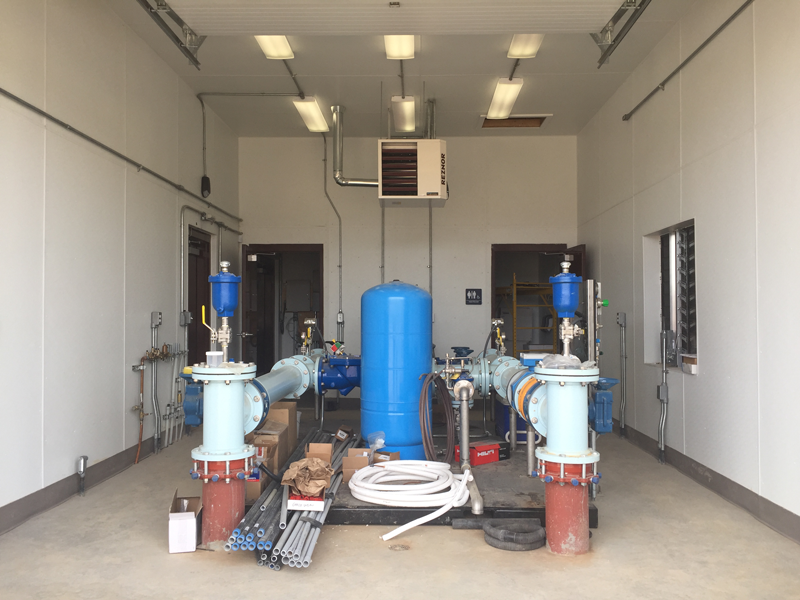
Image credit: romtecutilities.com
The retrofitting of the pumping station meticulously designed could save valuable infrastructure and also replace components no longer meeting the operational standards.
Begin with the Structures No One Would Like To Replace
Wet wells can be the most costly and disruptive part to replace, since they are constructed underground and attached to existing pipes and are essential for wastewater collection.
Retaining a concrete structure which is still functional could minimize the digging and construction.
The degrading of the area surrounding the access hatch may make this difficult. Romtec Utilities says that wet well hatches are typically replaced as part of retrofits. It may be more durable to replace the top slab instead of constructing a new hatch onto deteriorated concrete. This will allow for greater access to the structure and prolong its use, without the need to replace the entire structure as well.
A Powerful Pump Changes the Engineering
Imagine that the area of residence has increased significantly since the initial lift station installation. It is possible that the existing pumps are no longer adequate to handle the increase in wastewater flow.
A pumping station upgrade could involve higher-horsepower pumps, but equipment selection cannot happen independently of the surrounding system.
Engineers should also assess the hydraulic requirements of the system, including flow and total dynamic head. A larger pump installed without checking these parameters can cause operational problems rather than solving these. Making plans for future capacity in the initial design phase can allow for later expansion much more easily.
Make sure that the wastewater is moving during construction.
A retrofit to a wastewater pump station introduces a challenge that ordinary replacement of equipment projects do not be able to overcome: the station might require to be operational throughout construction.
Even when contractors are busy they continue to receive wastewater. In the case of the project, temporary bypass pumps may be needed to maintain the service throughout the removal and installation of existing equipment.
Romtec Utilities embraced this challenging task in the Federal Law Enforcement Training Center, Brunswick, Georgia.
The project involved replacing two aging wastewater lift stations and ensuring the operations of the facility. The project was able accommodate the footprints of existing stations as well in operational requirements, using local-specific engineering and integrated replacement systems. This illustrates how important it is to think about the sequence of construction before constructing.
When replacing becomes the best alternative
Not every station is suited for rehabilitation. Sewer lift stations may need to be rebuilt for a damaged wet well, or have a low structural capacity.
Before making a decision it is crucial to take into consideration the structural integrity of the structure, its compatibility with equipment, the accessibility to construction, the continuity of services and long-term needs. Romtec Utilities starts retrofitting and replacing projects by identifying the components that will be retained and those that will need to be replaced.
The company will then create site-specific engineering designs including budget estimates, site-specific designs, and preliminary designs. Prefabricated components are also able to help facilitate installation and cut down on needs for construction on site.
The project won’t be finished until the pumps are turned on
Modernized lift stations must be operated as a system in one. Prior to returning the lift station back to service, testing the startup and commissioning are a way to make sure that the pumps and control equipment and other components are operating in accordance with the approved design.
Manuals for maintenance and operation and also the training of operators are vital. Maintenance personnel must be familiar with new equipment and operating procedures as well as the documents before taking charge of the station.
Retrofitting successfully preserves the infrastructure and addresses the weaknesses that led to the need for modernization.
This means that municipalities and facility owners need to take a look beyond the immediate fixes. The best projects incorporate new equipment into existing structures to keep essential services running while construction is underway. They also prepare the pumping system so that it can continue in operation for a number of years.